Peptide Therapy Consultation in Miami: 7 Questions to Ask Before You Start
The Wellness Room
People often want a simple answer before a consultation. They want to know whether peptide therapy is the right option, what it costs, and how quickly anything might change.
That is not how a responsible wellness visit should work.
At The Wellness Room, the first conversation should clarify the goal, the history, and the plan. The consultation comes first. The recommendation comes after.
Why the first consultation matters
Peptide therapy is not something to guess your way into. The discussion should be shaped by your health history, your goals, and the provider's judgment.
That is especially important in Miami, where patients are often sorting through polished marketing, quick promises, and a lot of overlapping wellness language.
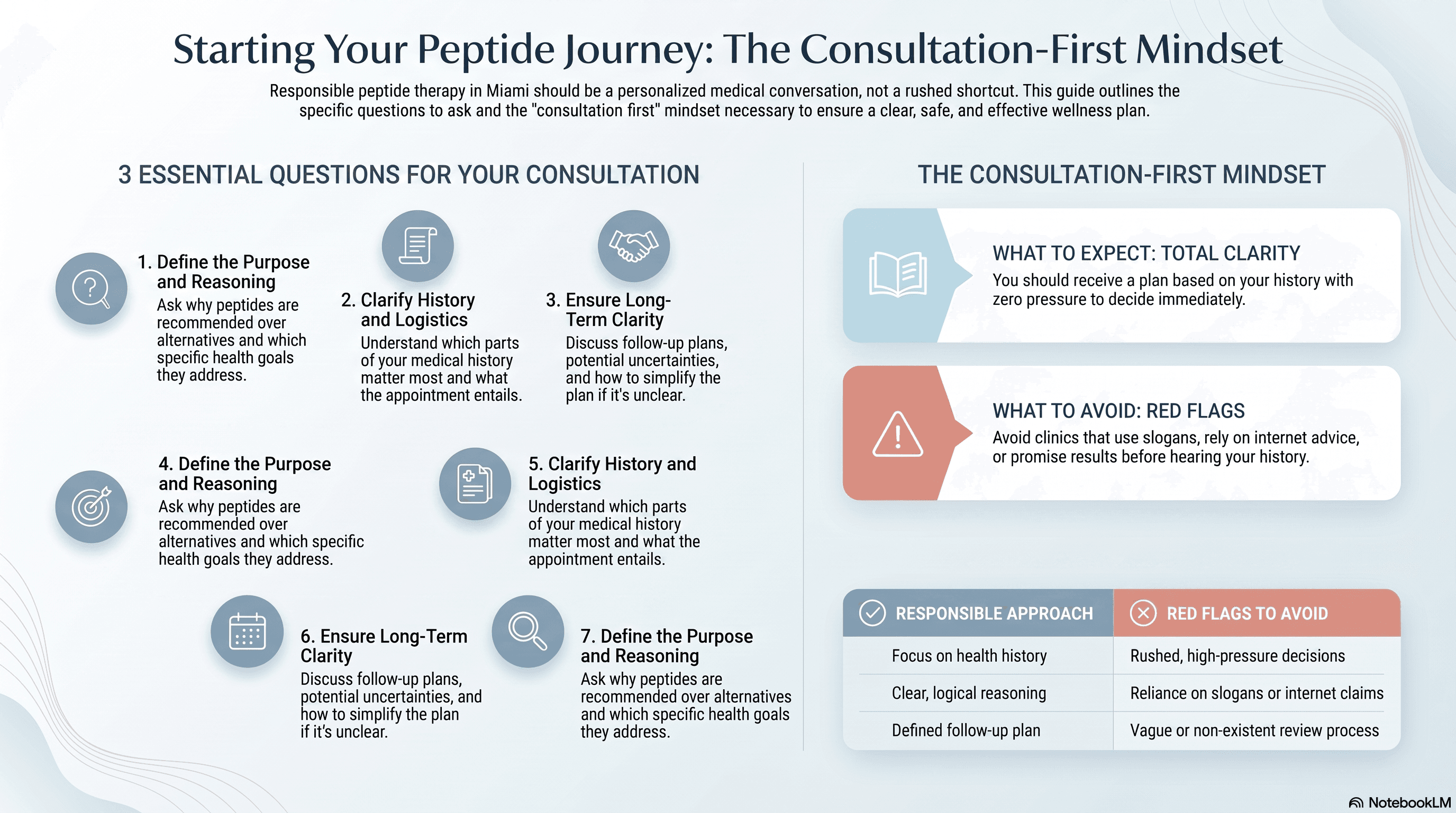
1. What problem is this plan trying to address?
Start with the simplest question.
Ask what the clinician is trying to learn from the consultation and what concern the conversation is meant to address. That keeps the visit focused on your actual goals instead of a generic treatment list.
2. Why are we discussing peptide therapy instead of another option?
This question forces the conversation to explain the recommendation.
If a provider is suggesting peptide therapy, ask why it belongs in the discussion and what alternatives were considered. A good answer should make the reasoning clearer, not more complicated.
3. What parts of my history matter most here?
The provider should explain what they need to know before making any recommendation.
That may include prior treatment history, current symptoms, recent changes, or other context the clinic considers relevant. The point is not to self-diagnose. The point is to understand what information the clinician is using.
4. What should I expect from the visit itself?
Patients often focus on the treatment and skip the appointment structure.
Ask how much time the visit takes, whether there are forms or follow-up steps, and what happens if the provider needs more information before moving forward. That helps the consultation feel concrete.
5. How will you decide whether the plan should change later?
Any good care plan should have a way to review it.
Ask what kind of follow-up the clinic expects, what would cause the plan to change, and how the provider prefers to check in. The answer should be practical, not vague.
6. What uncertainties should I understand before deciding?
This is the question that keeps the conversation honest.
Ask what the provider does not know yet, what the limits of the recommendation are, and what would make them pause or take a different approach. You should not have to infer those boundaries on your own.
7. What should I do if the recommendation does not feel clear?
You are allowed to slow the conversation down.
If the plan still feels unclear, ask for a simpler explanation or a follow-up visit. A consultation should make the next step easier to understand, not harder.
What not to expect
A responsible clinic should not push you to make a rushed decision.
You should not be asked to rely on slogans, general internet advice, or unsupported claims. You also should not be expected to decide on treatment before the provider has heard your history.
A consultation-first mindset
The best wellness visit is the one that leaves you with clarity.
That means: - No pressure to choose immediately - No treatment promises that ignore your history - No guessing about the follow-up plan - No confusion about why the recommendation was made
If peptide therapy is part of the discussion, the goal is to understand the reasoning before anything else happens.
Bottom line
Peptide therapy should be a conversation, not a shortcut.
If you are starting with a consultation in Miami, the right first step is to ask clear questions, listen for a clear explanation, and make sure the plan makes sense before you move forward.
The Wellness Room editorial team
Medical-information boundary
This article provides general information and is not medical advice. The Wellness Room handles personal questions, eligibility, and treatment decisions through a consultation.
📍 14680 SW 8th St #211, Miami, FL 33184
Ready to discuss your questions?